

Urea Formaldehyde Resin.
The workhorse adhesive resin of the wood-panel industry. Fast-curing, consistent and economical at scale.
Milky whiteNH₂–CO–NH₂ + HCHO → UF condensate
From clear solution to finished binder
Urea formaldehyde is built in two stages, alkaline then acidic, and the batch changes character in front of you as it goes.
-
01 / 04
Clear, thin liquid
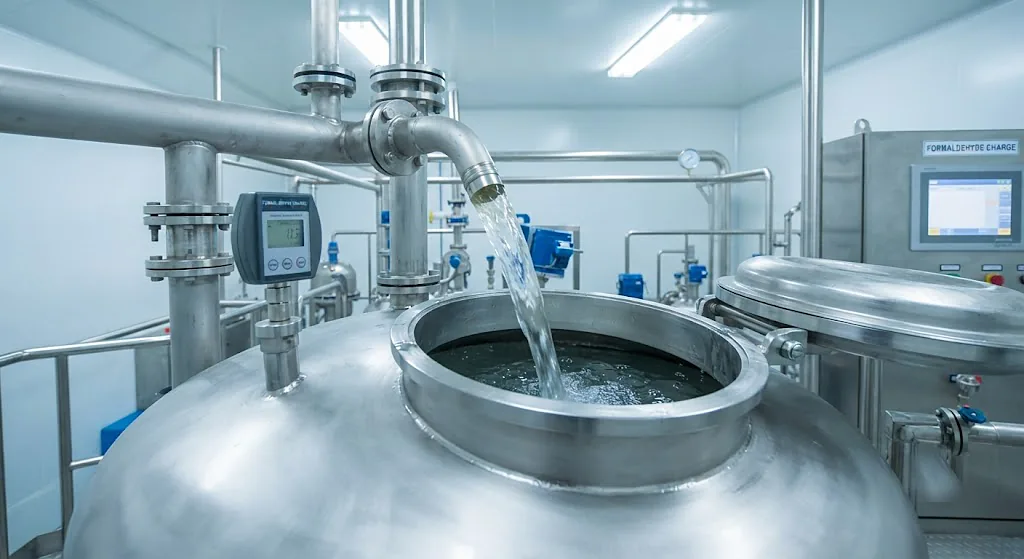
Charging the formaldehyde
Formaldehyde solution is metered into a clean stainless reactor through a flow meter. The agitator stays still until the urea goes in.

-
02 / 04
Dissolving, warming
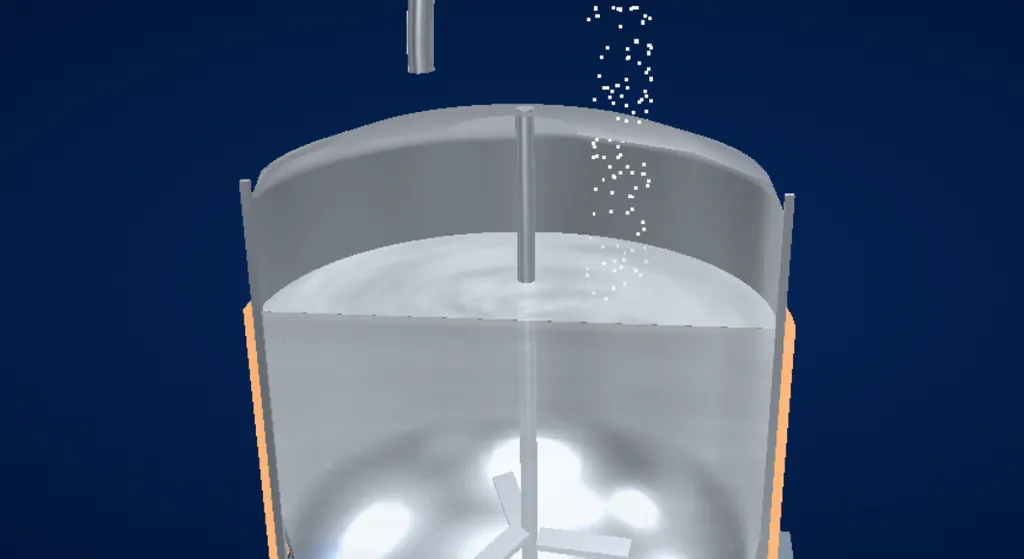
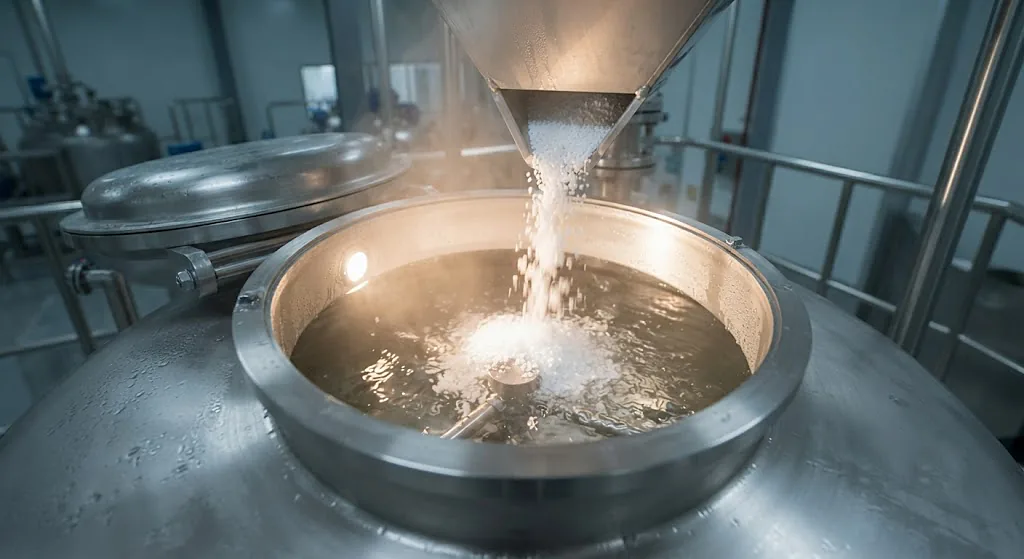
Urea in, alkaline stage
Solid urea is charged through the manway and dissolves quickly. Under alkaline conditions and gentle heat, the first stage of the reaction, methylolation, gets under way.
-
03 / 04
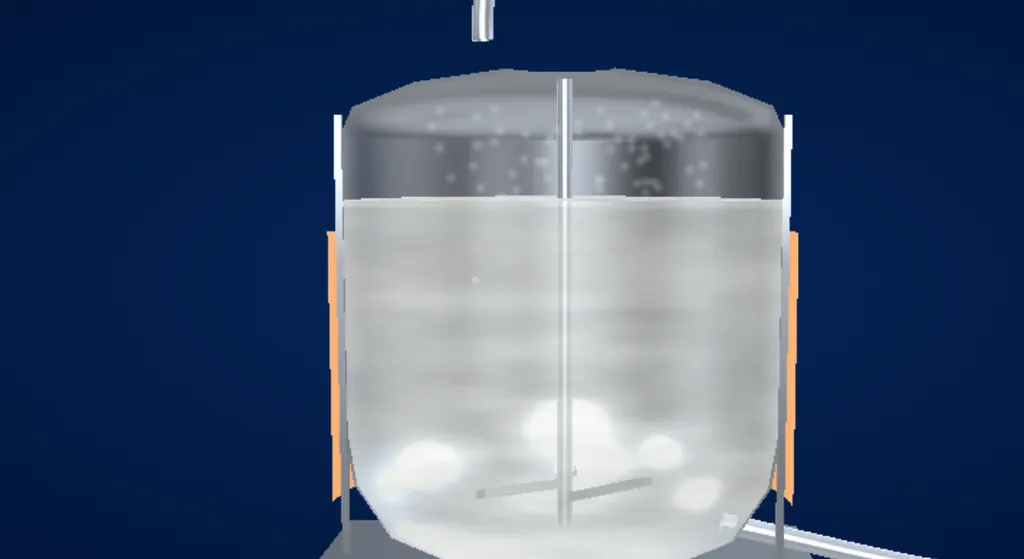
Hazy, thickening
Acid condensation
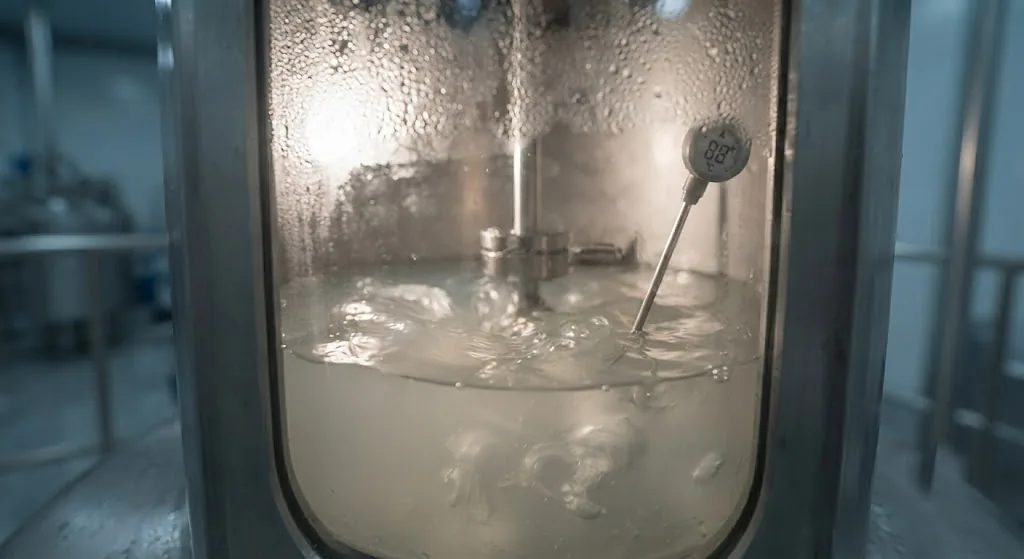
The pH is brought into the acidic range. The molecules begin to link into longer chains, the batch turns hazy and the viscosity climbs. Temperature control at this stage decides the quality of the finished resin.
-
04 / 04
Stable liquid resin
Neutralise, cool, discharge
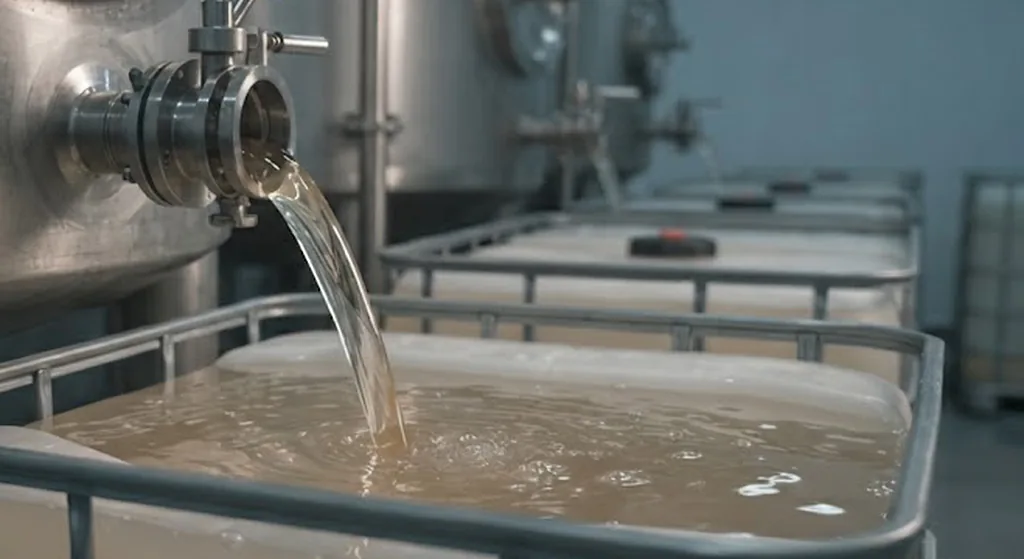
At the target viscosity the pH goes back to neutral or slightly alkaline and the batch is cooled fast to hold it on specification, then discharged to storage or IBCs.

The same four stages, frame by frame
-
01 / 04
Clear, thin liquid
Charging the formaldehyde
-
02 / 04
Dissolving, warming
Urea in, alkaline stage
-
03 / 04
Hazy, thickening
Acid condensation
-
04 / 04
Stable liquid resin
Neutralise, cool, discharge
Overview
Urea formaldehyde resin is the primary bonding system for interior-grade wood panels. Condensed from urea and formaldehyde under closely controlled temperature and pH, it forms strong, rigid bonds with wood and cures quickly on hot presses, which is why it remains the standard for plywood, particleboard and fibreboard.
Our WP-UF series is made batch by batch to suit the customer’s press cycle and climate. Solid content, viscosity and gel time are tuned to order, and free formaldehyde is held to tight limits for compliant, low-emission panels. The same chemistry also serves as a binder in fibreglass composites and paper laminates.
Applications
| Appearance | Milky white free-flowing liquid |
|---|---|
| Solid content | 50 ± 1 % |
| Viscosity (B4 cup, 30 °C) | 30 – 60 s |
| pH at 30 °C | 7.5 – 8.5 |
| Specific gravity at 30 °C | 1.27 – 1.29 |
| Gel time at 100 °C (1 % NH₄Cl) | 45 – 65 s |
| Free formaldehyde | ≤ 1.0 % |
| Water tolerance | 1 : 1.5 – 1 : 2.5 |
| Shelf life at 30 °C | 30 days |
Typical values, not a sales specification. A certificate of analysis accompanies every consignment; parameters are tailored to order.
Packaging & storage
Supplied in HDPE barrels of 235 kg net or by road tanker. Store in a cool, ventilated place away from direct sunlight, keep containers closed and use on a first-in, first-out basis within the stated shelf life.
Also from Westcoast
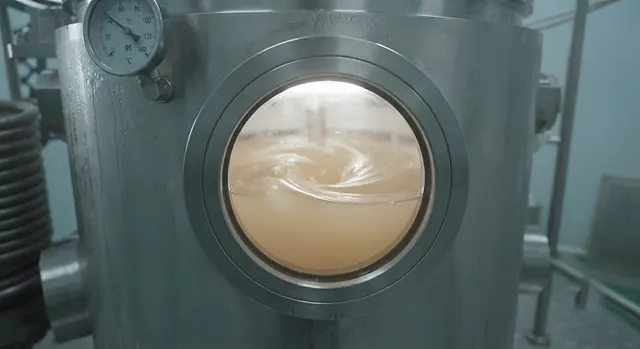 MF
Laminates & molding
Melamine Formaldehyde Resin
Hard, heat- and scratch-resistant chemistry for decorative laminates, overlays and molded tableware.
An opaque white slurry that turns glass-clear
View product PF
Exterior & structural
Phenol Formaldehyde Resin (Liquid)
Weather- and boil-resistant bonds for exterior-grade plywood, structural panels and industrial laminates.
Deepens from clear to dark amber as the chains grow
View product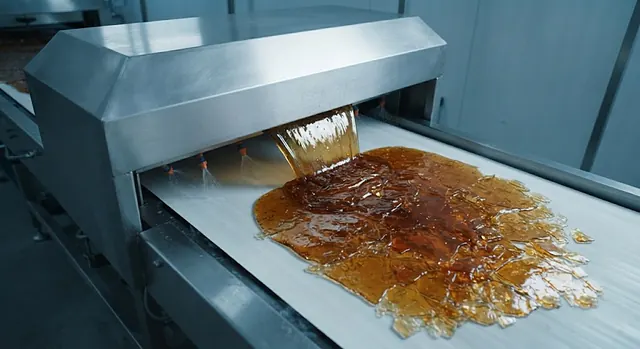 PFP
Molding, friction & abrasives
Phenol Formaldehyde Resin (Powder)
Free-flowing phenolic powder for molding compounds, brake linings, bonded abrasives and foundry work.
Liquid to amber glass to fine powder
View productTrial it on your line.
We supply sample quantities with full technical support. Send us your process conditions to begin.