

Alkyd Resin.
The backbone of solvent-borne enamels, primers and wood finishes. Glossy, tough and easy to formulate with.
Clear golden amberPolyol + phthalic anhydride + fatty acid → alkyd
Esterify, thin, check
An alkyd is cooked until its acid value falls into range, then let down into solvent while it is still hot enough to flow.
-
01 / 04
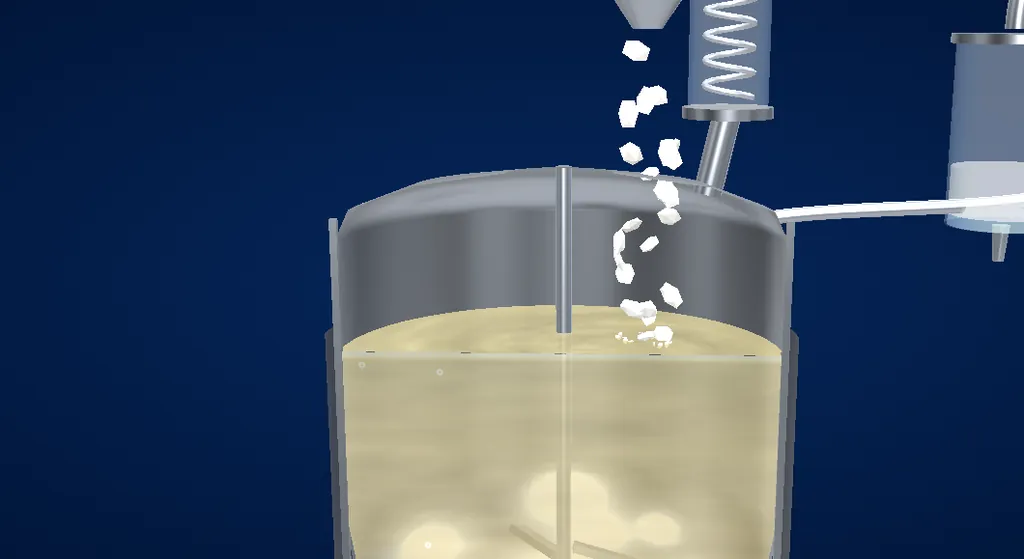
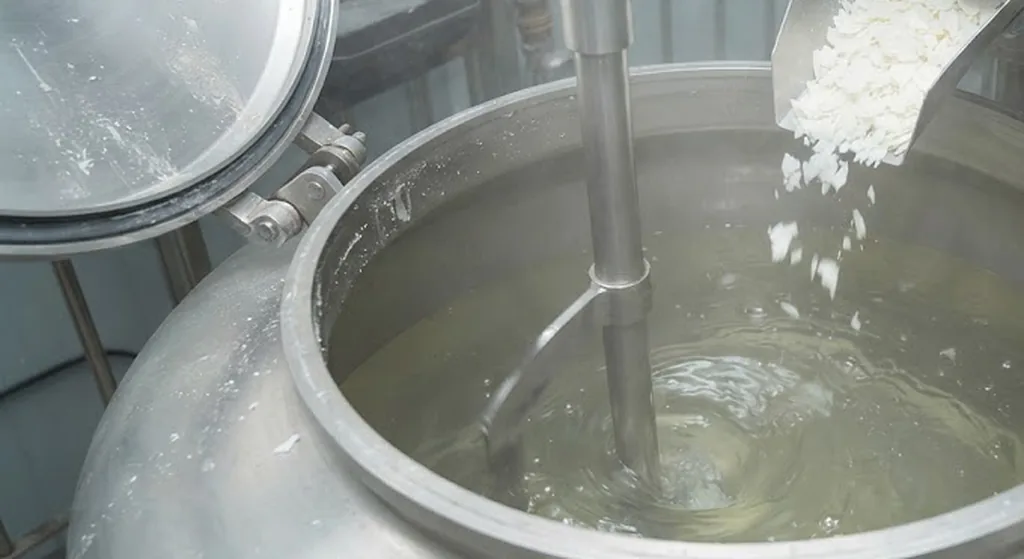
Flakes dissolving
Charging the reactor
Glycerine and soya fatty acids are loaded, then flaked phthalic anhydride is fed in under agitation and begins to dissolve into the liquid.
-
02 / 04
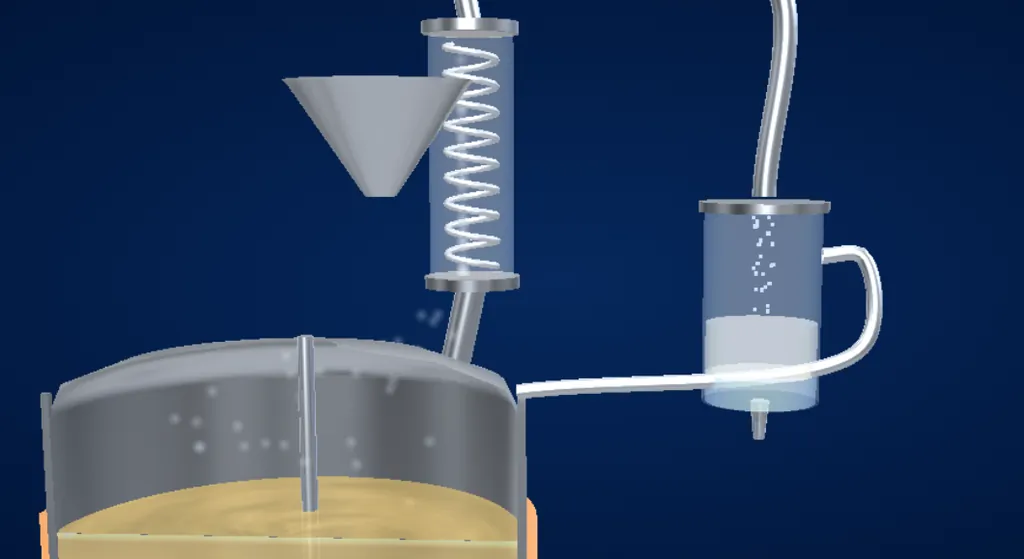
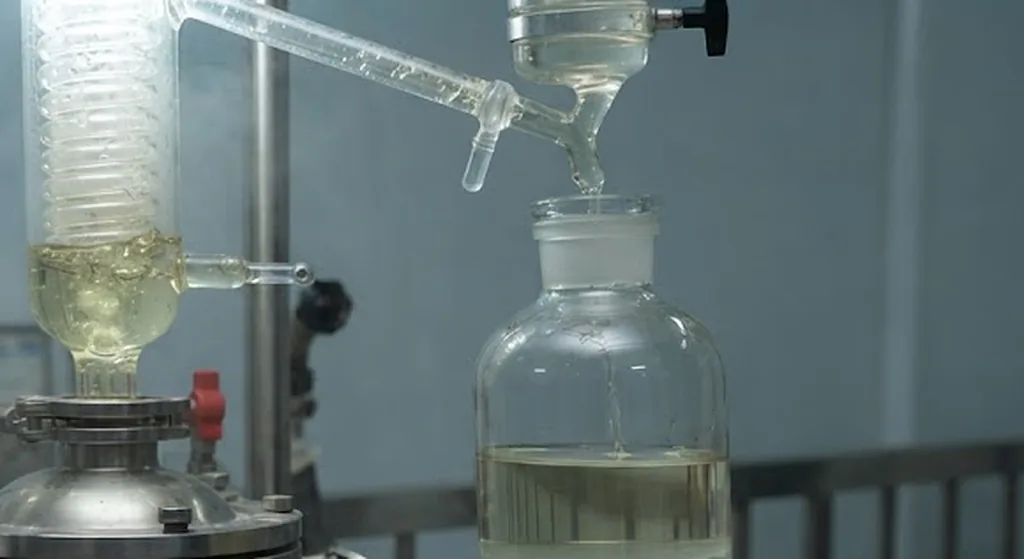
Water separating out
Esterification
As the batch heats, the reaction forms water. A little xylene carries it up as vapour; in the decanter the water settles to the bottom and is drawn off, while the solvent flows back into the reactor.
-
03 / 04
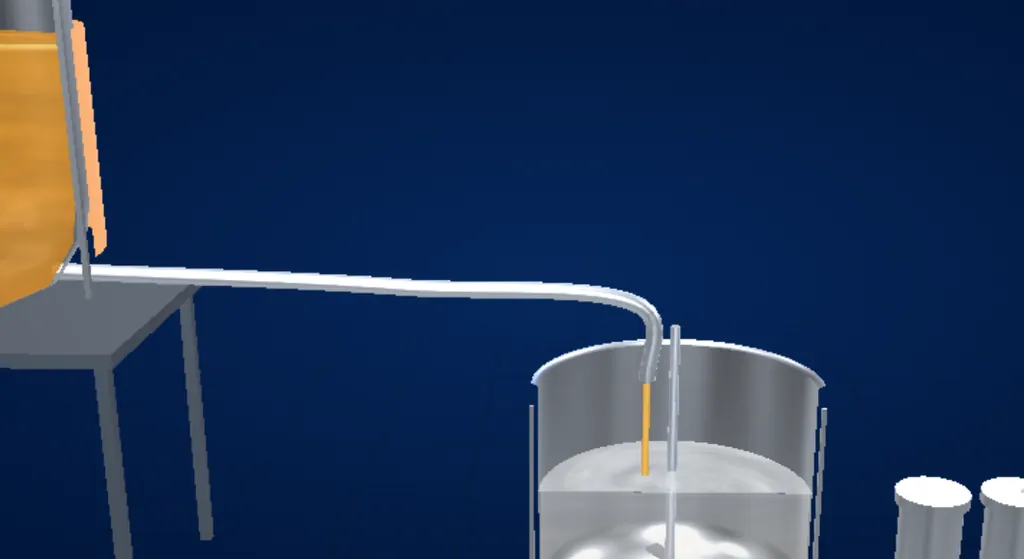
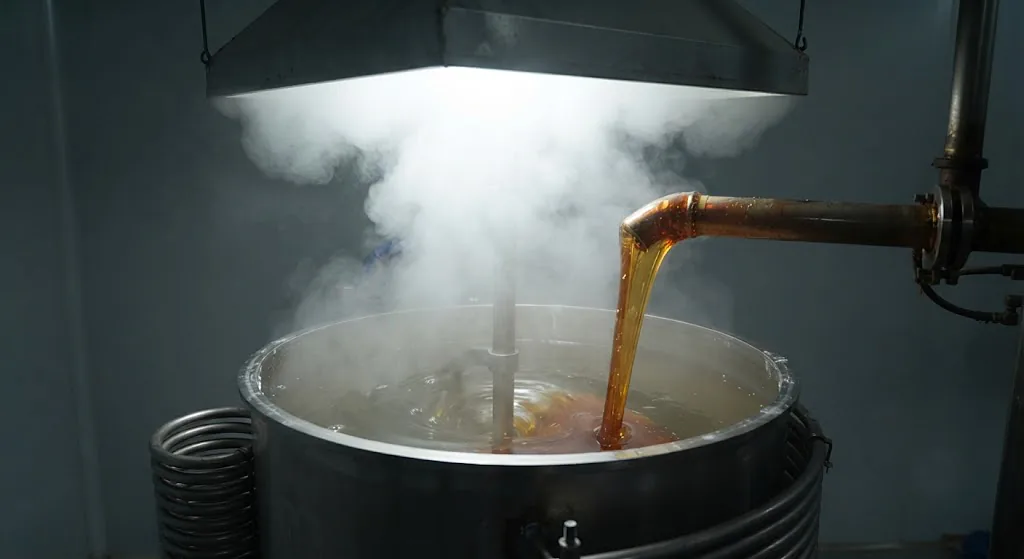
Hot, golden melt
Thinning
When acid value and viscosity reach target, the hot resin is transferred into a tank of solvent that takes it down to a workable, pumpable solution.
-
04 / 04
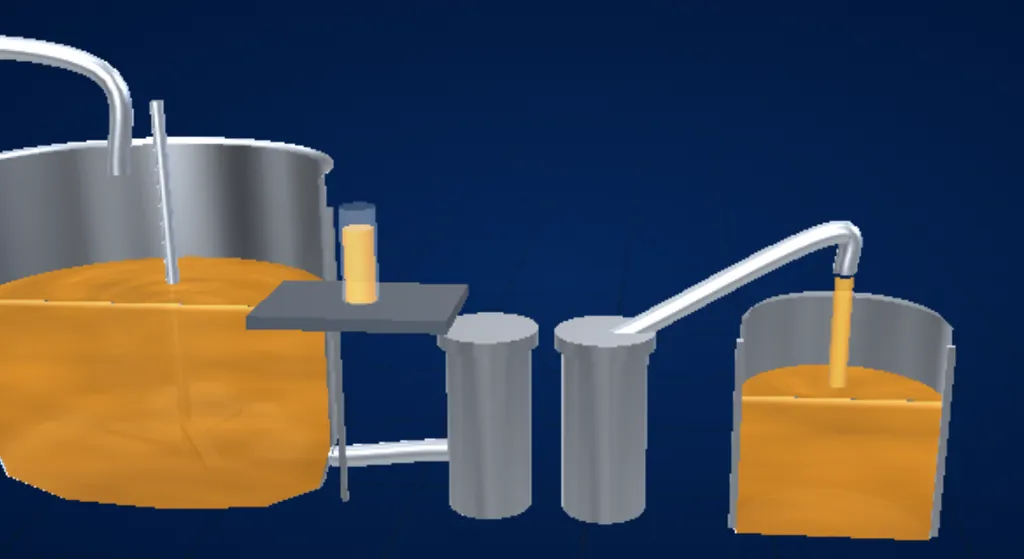
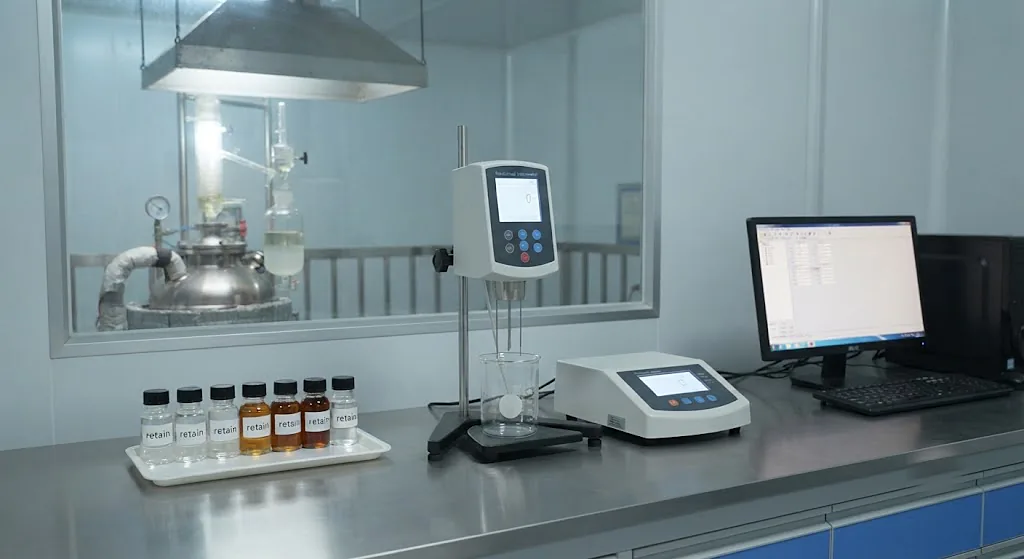
Clear amber solution
Quality check and filtration
Every batch is checked for viscosity and colour before approval, then filtered to remove any particles and filled into drums or tankers.
The same four stages, frame by frame
-
01 / 04
Flakes dissolving
Charging the reactor
-
02 / 04
Water separating out
Esterification
-
03 / 04
Hot, golden melt
Thinning
-
04 / 04
Clear amber solution
Quality check and filtration
Overview
Alkyd resins are polyesters modified with fatty acids. They are made by reacting a polyol such as glycerine with phthalic anhydride and a fatty acid, and they give paints their gloss, flow and toughness. They remain the most widely used binder in solvent-borne decorative and industrial coatings.
We produce alkyds by the fatty-acid process, which gives close control of oil length and molecular weight. Grades are supplied thinned in the solvent of your choice at the solids and viscosity your formulation calls for, with acid value and colour checked on every batch.
Applications
| Appearance | Clear, pale to golden amber viscous liquid |
|---|---|
| Oil length | Short, medium or long (by grade) |
| Non-volatile content | 50 – 70 % |
| Solvent | Mineral turpentine, xylene or blends |
| Acid value (on solids) | ≤ 10 mg KOH/g |
| Colour (Gardner) | ≤ 8 |
| Viscosity | To grade |
Typical values, not a sales specification. A certificate of analysis accompanies every consignment; parameters are tailored to order.
Packaging & storage
Supplied in MS barrels or by tanker. Keep containers tightly closed and away from sources of ignition; store below 35 °C. Refer to the MSDS supplied with each consignment for solvent handling.
Also from Westcoast
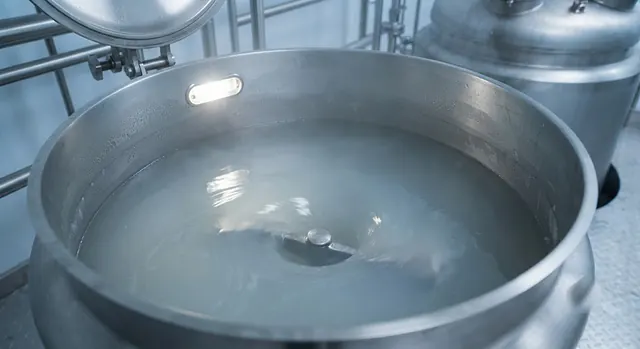 AC
Waterborne binders
Acrylic Latex Emulsion
Waterborne acrylic emulsions for wall paints, textile binders, waterproofing and adhesives.
A blue-grey sheen that grows into bright white
View product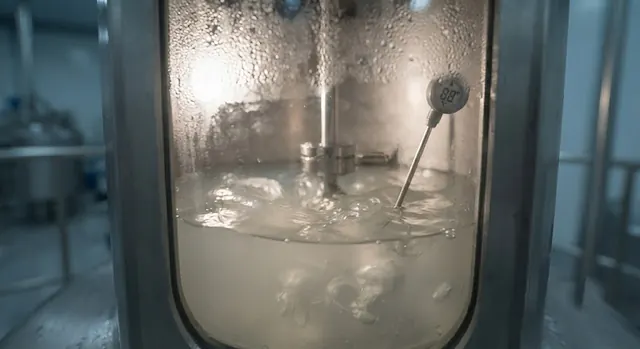 UF
Wood adhesives
Urea Formaldehyde Resin
The bonding resin behind most interior-grade panels, with fast cure, steady gel time and good economy at volume.
Turns from clear to milky as the chains link up
View product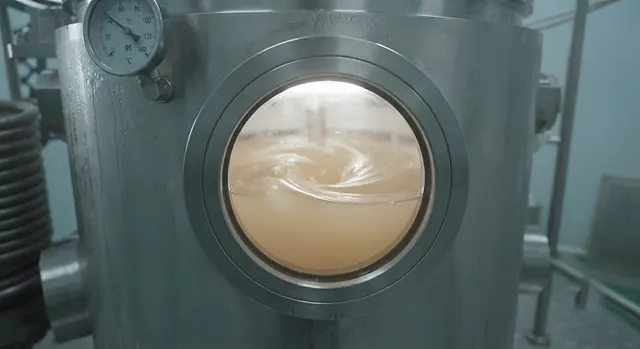 MF
Laminates & molding
Melamine Formaldehyde Resin
Hard, heat- and scratch-resistant chemistry for decorative laminates, overlays and molded tableware.
An opaque white slurry that turns glass-clear
View productTrial it on your line.
We supply sample quantities with full technical support. Send us your process conditions to begin.