

Phenol Formaldehyde Resin (Powder).
Liquid resin, concentrated, cooled into glass and milled to a fine powder. A solid phenolic for molding compounds, friction materials and bonded abrasives.
Amber glass to tan powderC₆H₅OH + HCHO → PF novolac
Liquid to glass to powder
Four changes of state, shown the way they actually happen: gradually, and in order.
-
01 / 04
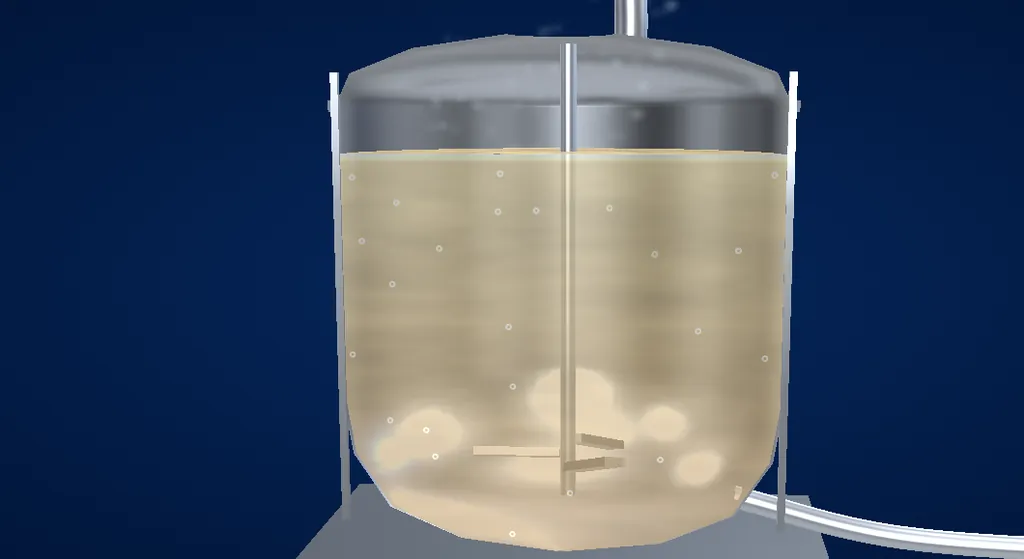
Clear to pale amber
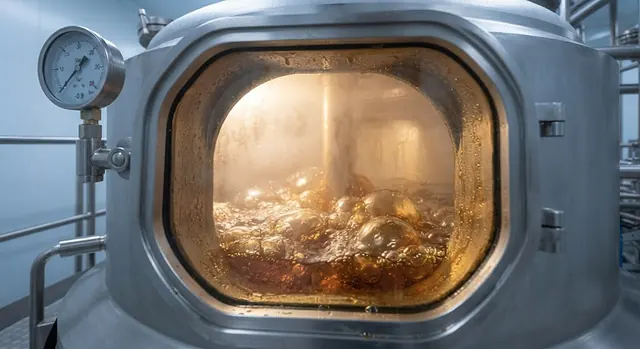
Reaction
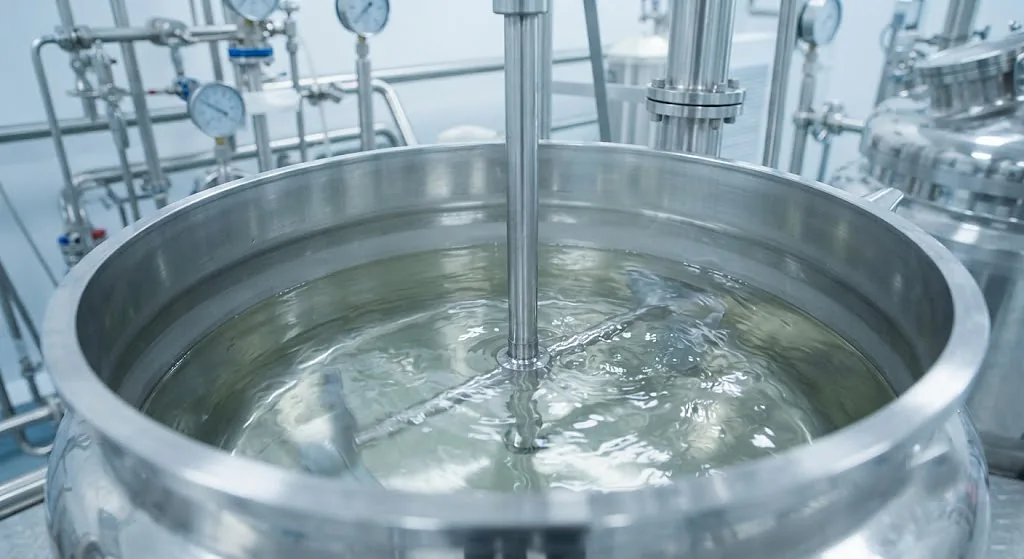
Phenol and formaldehyde are charged into a stainless reactor and heated under agitation. The liquid starts clear to pale amber and begins to condense into a prepolymer.
-
02 / 04
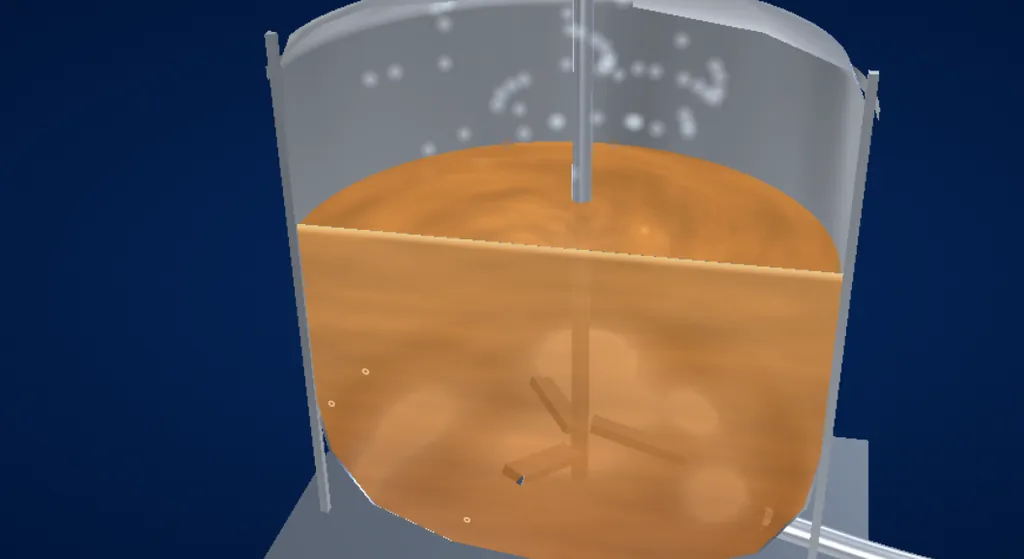
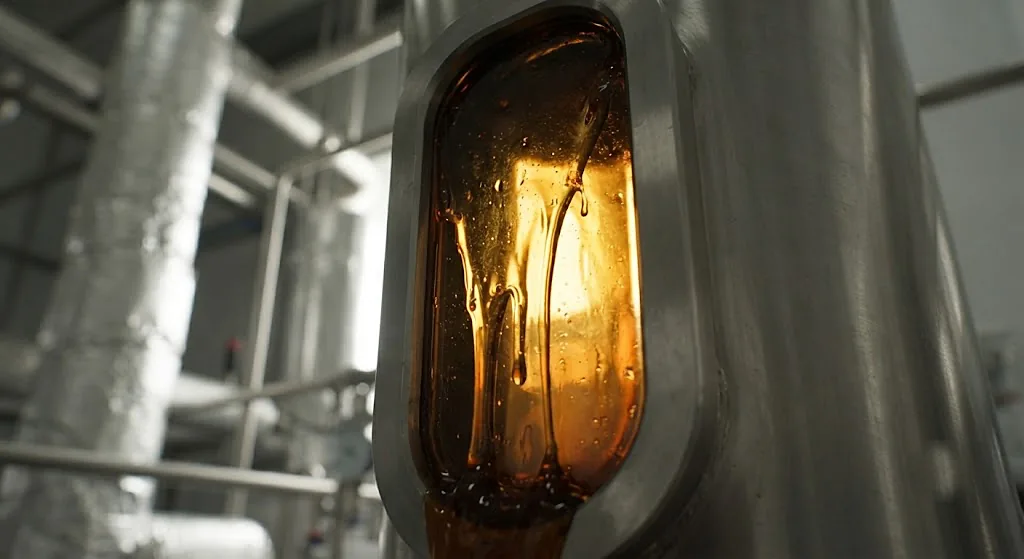
Amber syrup
Dehydration under vacuum
Vacuum draws off water and excess formaldehyde. You can see the batch concentrate: the level drops, the colour deepens to amber and the syrup thickens around the agitator.
-
03 / 04
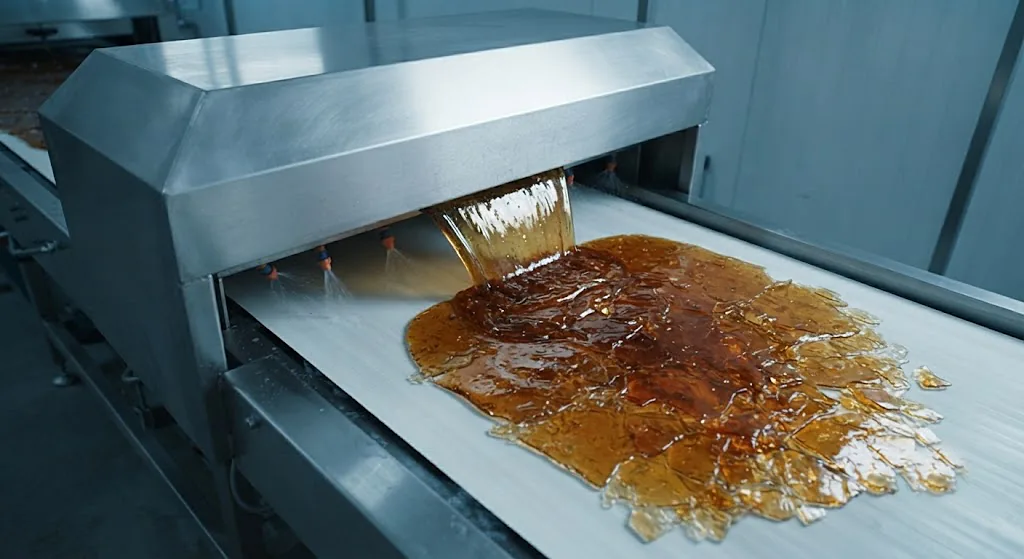
Glassy amber sheet
Cooling on the belt
The hot resin is spread onto a chilled steel belt. It sets gradually along the belt, from a glowing melt to a glassy amber sheet, and only fractures into brittle flakes once it has cooled.

-
04 / 04
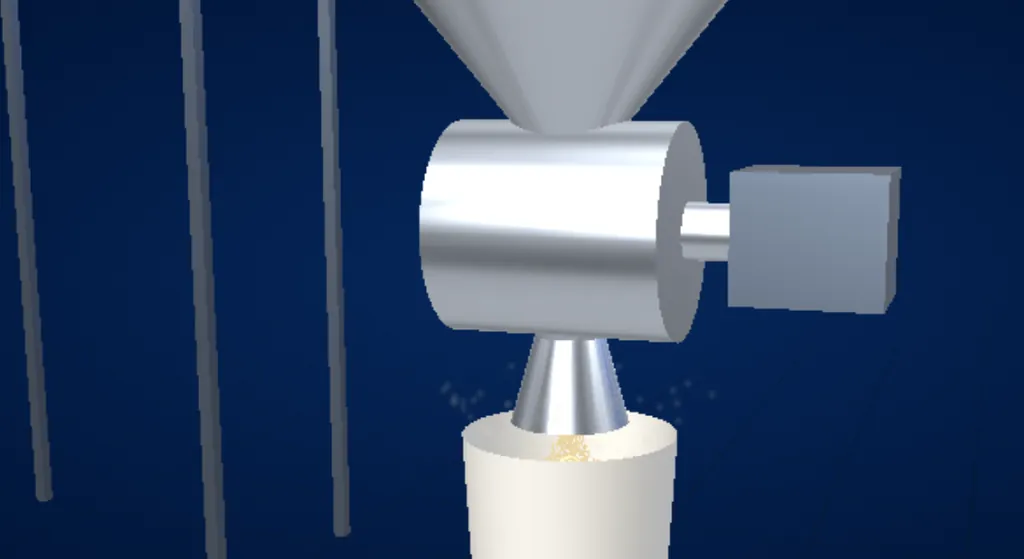
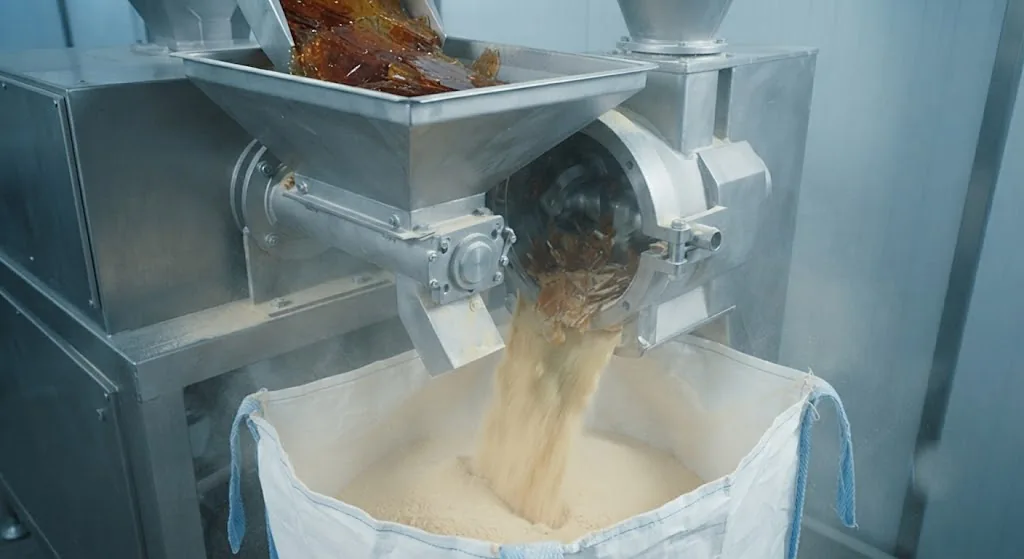
Fine tan powder
Milling to powder
The flakes are fed into an impact mill. Only fine, free-flowing powder leaves the grinding chamber, light yellow to tan, ready to be packed and sealed for dispatch.
The same four stages, frame by frame
-
01 / 04
Clear to pale amber
Reaction
-
02 / 04
Amber syrup
Dehydration under vacuum
-
03 / 04
Glassy amber sheet
Cooling on the belt
-
04 / 04
Fine tan powder
Milling to powder
Overview
Powdered phenol formaldehyde resin starts life the same way as the liquid grades, in a reactor, but it is taken much further. The resin is concentrated under vacuum, cooled into a brittle, glassy sheet and milled into a fine, free-flowing powder that stores well and blends easily with fillers and fibres.
Our WP-PFP grades are supplied with or without a hexamine curing agent and ground to the fineness the application needs. Flow and cure speed are set for the customer’s molding or pressing temperature, whether that is a brake-lining line, a grinding-wheel press or a molding-compound plant.
Applications
| Appearance | Light yellow to tan free-flowing powder |
|---|---|
| Hexamine content | 0 – 10 % (by grade) |
| Flow at 125 °C | 20 – 60 mm |
| Gel time at 150 °C | 40 – 120 s |
| Fineness (through 200 mesh) | ≥ 95 % |
| Free phenol | ≤ 3.0 % |
| Moisture | ≤ 1.0 % |
Typical values, not a sales specification. A certificate of analysis accompanies every consignment; parameters are tailored to order.
Packaging & storage
Packed in lined bags sealed against moisture; pack sizes to order. Store cool and dry, keep bags closed between uses and avoid stacking in direct heat to prevent caking.
Also from Westcoast
 PF
Exterior & structural
Phenol Formaldehyde Resin (Liquid)
Weather- and boil-resistant bonds for exterior-grade plywood, structural panels and industrial laminates.
Deepens from clear to dark amber as the chains grow
View product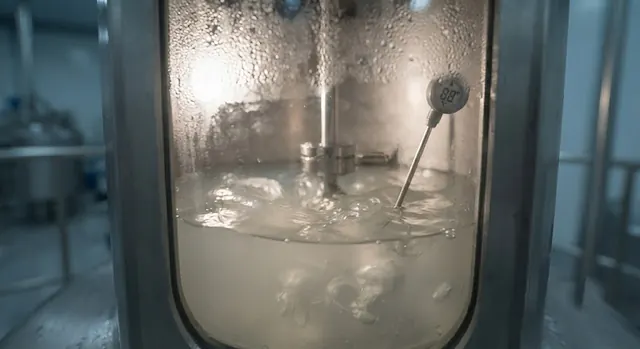 UF
Wood adhesives
Urea Formaldehyde Resin
The bonding resin behind most interior-grade panels, with fast cure, steady gel time and good economy at volume.
Turns from clear to milky as the chains link up
View product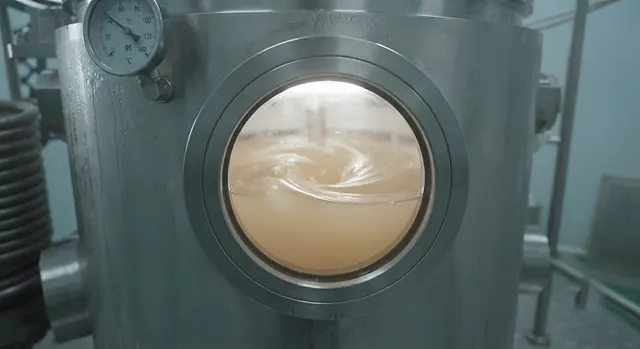 MF
Laminates & molding
Melamine Formaldehyde Resin
Hard, heat- and scratch-resistant chemistry for decorative laminates, overlays and molded tableware.
An opaque white slurry that turns glass-clear
View productTrial it on your line.
We supply sample quantities with full technical support. Send us your process conditions to begin.