

Acrylic Latex Emulsion.
Water-based acrylic binders for emulsion paints, textiles and construction chemicals. Low odour, durable and easy to clean up.
Bright white with a blue sheenAcrylic monomers in water → polymer dispersion
Seed, grow, filter
Emulsion polymerisation happens inside particles far too small to see, but the colour of the batch tells you exactly where it is.
-
01 / 04
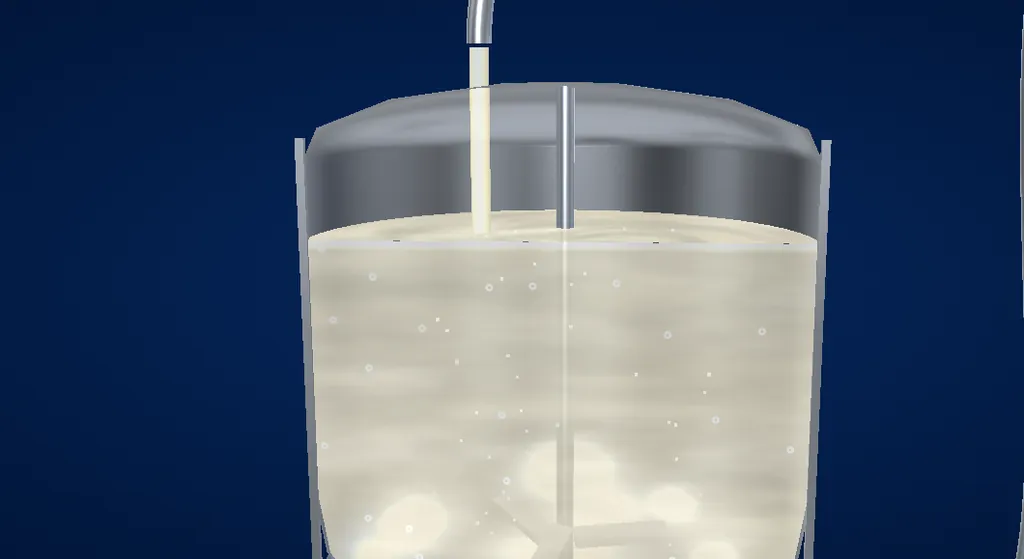
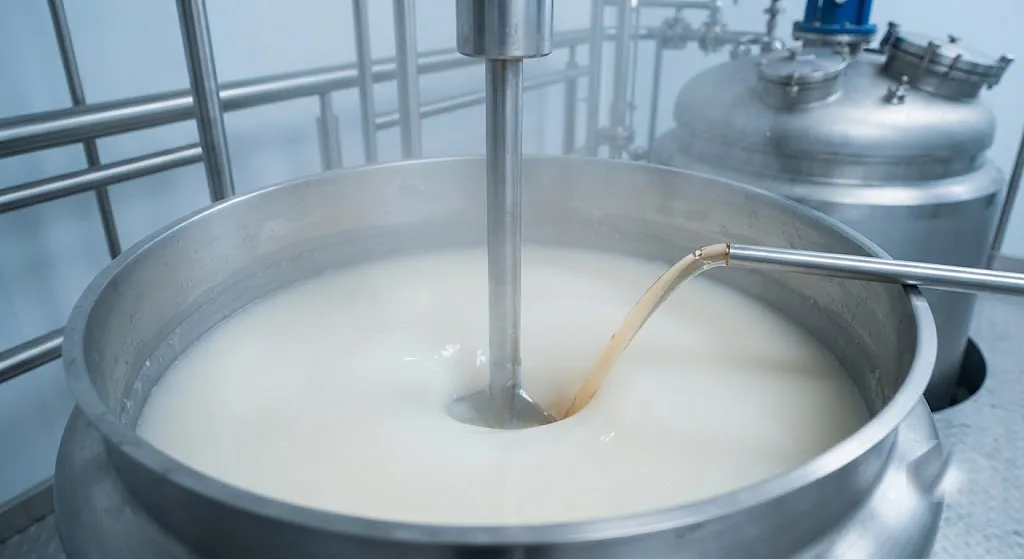
Milky macroemulsion
Pre-emulsion
Acrylic monomers, functional acids and surfactants are mixed into water at high speed to form a stable, milky pre-emulsion. Nitrogen is bubbled through to remove oxygen.
-
02 / 04
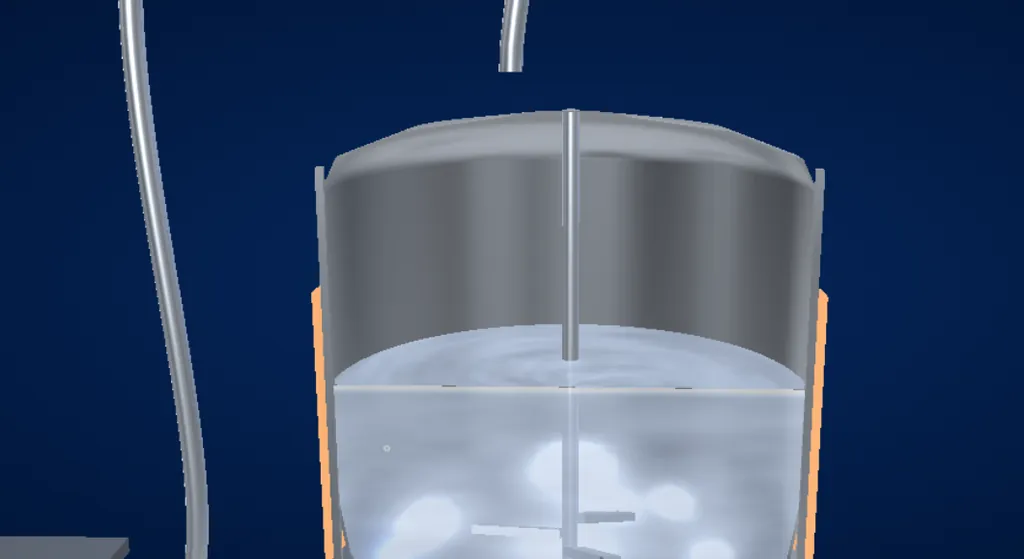
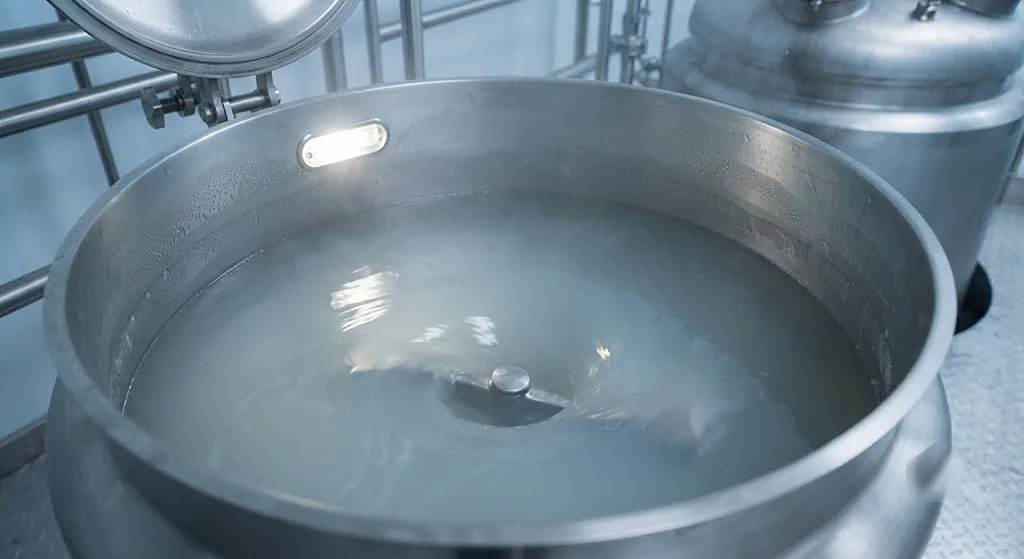
Translucent blue-grey
Seeding
A portion of the pre-emulsion and initiator go into hot water in the reactor. The batch turns a translucent blue-grey as the first tiny polymer particles form.
-
03 / 04
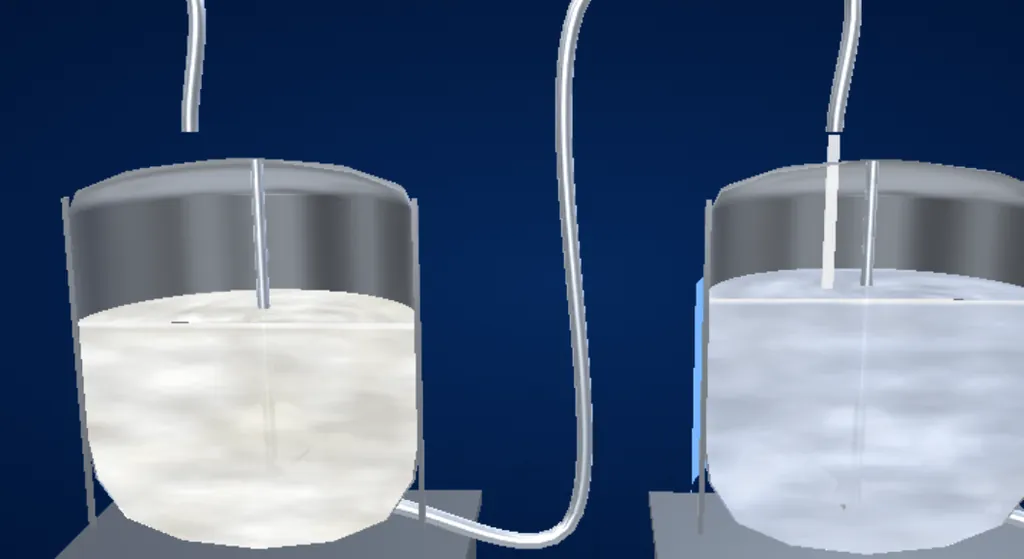
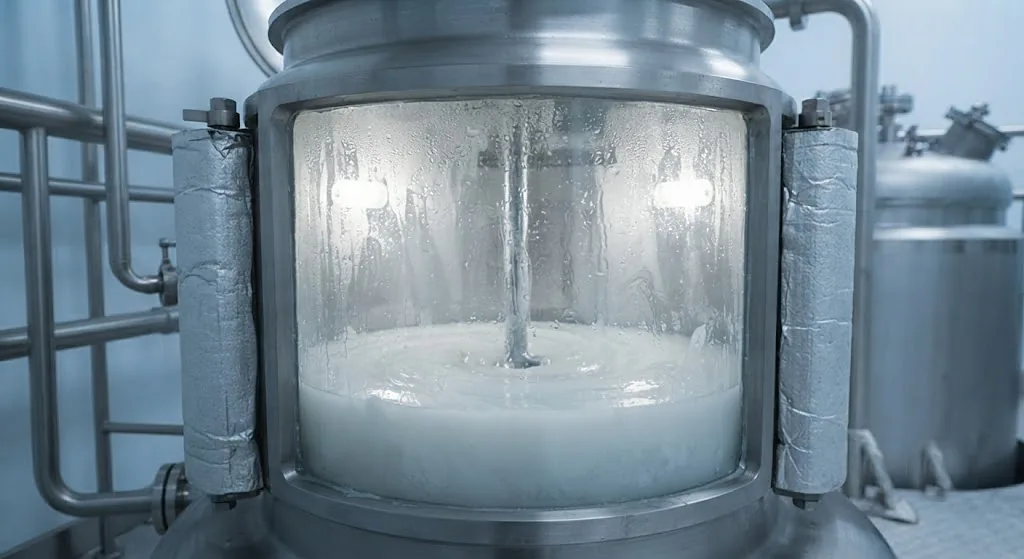
Thickening, turning white
Particle growth
The rest of the monomer is fed in over several hours. Particles grow evenly while the jacket removes the heat of reaction, and the latex thickens and turns fully white.
-
04 / 04
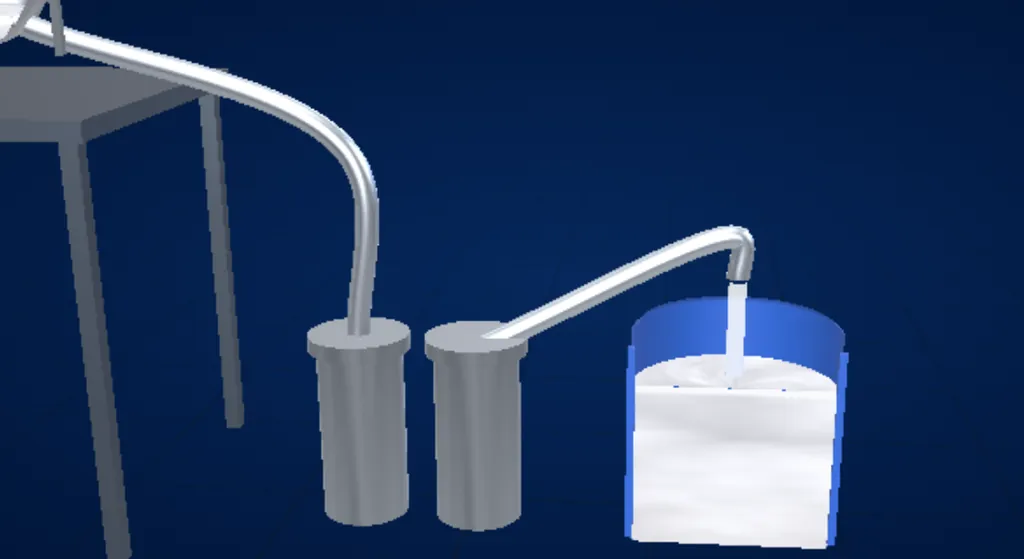
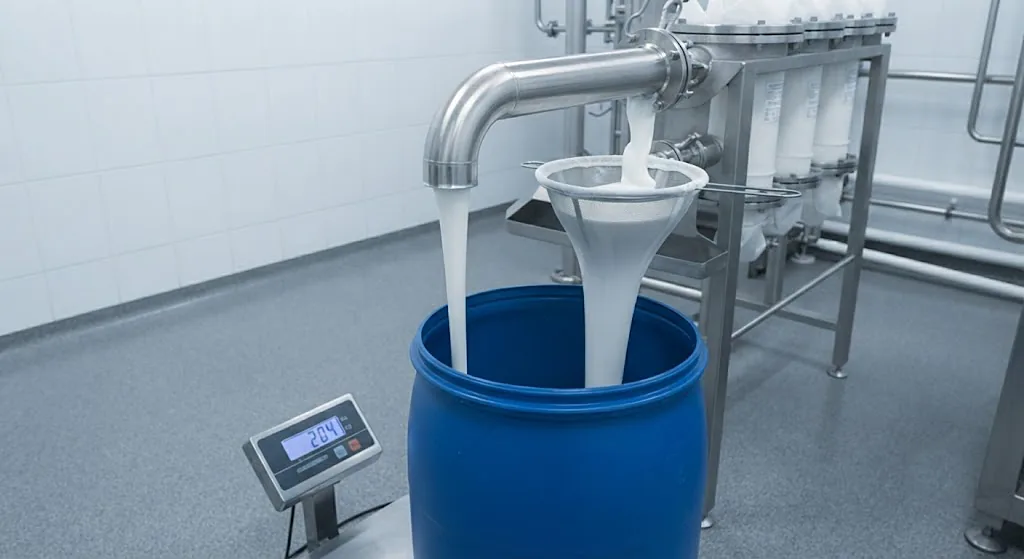
Bright white dispersion
Filtration and filling
A final initiator shot mops up any leftover monomer. The batch is cooled, adjusted for pH and passed through bag filters before filling.
The same four stages, frame by frame
-
01 / 04
Milky macroemulsion
Pre-emulsion
-
02 / 04
Translucent blue-grey
Seeding
-
03 / 04
Thickening, turning white
Particle growth
-
04 / 04
Bright white dispersion
Filtration and filling
Overview
Acrylic latex is a stable dispersion of very fine acrylic polymer particles in water. As the water evaporates, the particles pack together and fuse into a continuous, flexible film. That makes it the binder of choice for emulsion paints and for a wide range of waterborne coatings, textile and construction products.
Our emulsions are made by semi-batch emulsion polymerisation, which lets us control particle size and film properties closely. Grades are available for interior and exterior paints, textile printing and finishing, waterproofing and tile adhesives, with solids, viscosity and film-forming temperature set to the application.
Applications
| Appearance | Milky white liquid with a bluish tinge |
|---|---|
| Solid content | 45 – 55 % |
| Viscosity (Brookfield, 30 °C) | 500 – 5,000 cP (by grade) |
| pH | 7.5 – 9.0 |
| Minimum film-forming temperature | By grade |
| Particle size | 0.1 – 0.3 µm |
| Shelf life | 6 months, protected from frost |
Typical values, not a sales specification. A certificate of analysis accompanies every consignment; parameters are tailored to order.
Packaging & storage
Supplied in HDPE drums, IBCs or by tanker. Store between 5 °C and 35 °C and protect from frost and direct sunlight. Keep containers closed to prevent skinning.
Also from Westcoast
 AK
Paints & coatings
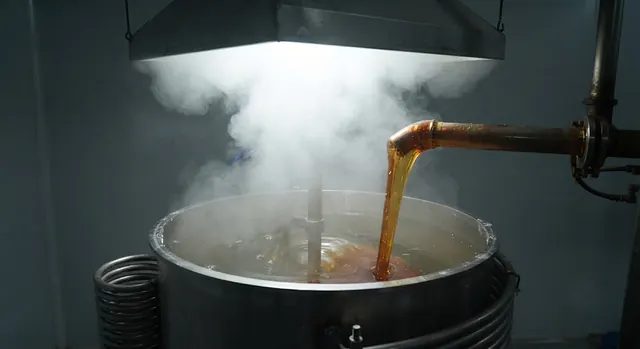
Alkyd Resin
Solvent-borne binders for decorative enamels, industrial primers and wood finishes.
Flakes dissolve into a golden, glossy melt
View product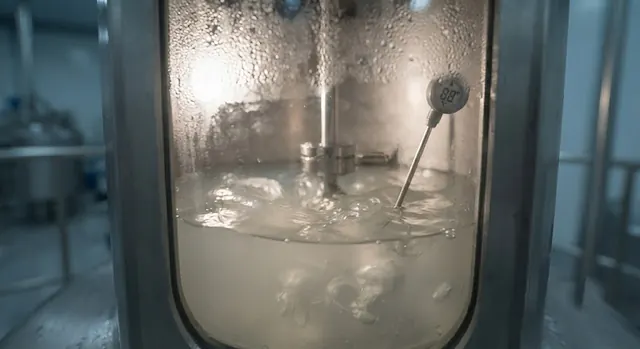 UF
Wood adhesives
Urea Formaldehyde Resin
The bonding resin behind most interior-grade panels, with fast cure, steady gel time and good economy at volume.
Turns from clear to milky as the chains link up
View product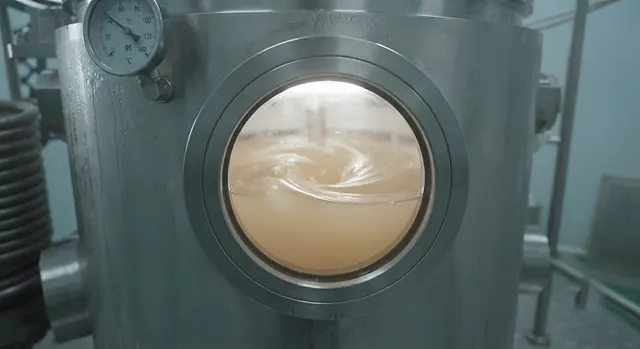 MF
Laminates & molding
Melamine Formaldehyde Resin
Hard, heat- and scratch-resistant chemistry for decorative laminates, overlays and molded tableware.
An opaque white slurry that turns glass-clear
View productTrial it on your line.
We supply sample quantities with full technical support. Send us your process conditions to begin.